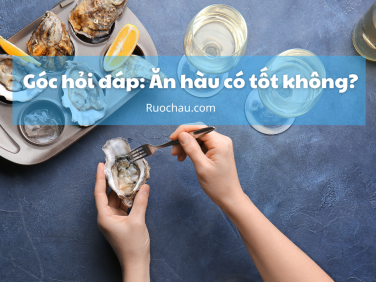
Milk oyster is the name of Pacific oyster in Vietnam. Their scientific name is Crassostrea gigas (Pacific oyster) – Thunberg, 1793. In addition, milk oyster is also called milk oyster, Pacific milk oyster…
Characteristics of Pacific milk oyster
The oyster body is covered by two hard shells, the left shell is cup-shaped, larger than the right shell and often clings to the rock substrate. Meanwhile, the right shell is smaller and flatter. The top of the shell is on top and has a horn plate attached between the two shells. Oyster shells have 3 layers:
- The outer layer is made of thin, easy-to-peel horn and is made entirely of Protein.
- The thickest middle layer is limestone with a structure consisting of crystalline Calcium carbonate, firmly attached to the Protein body.
- The innermost layer is made of thin, shiny, bright and very hard nacre.
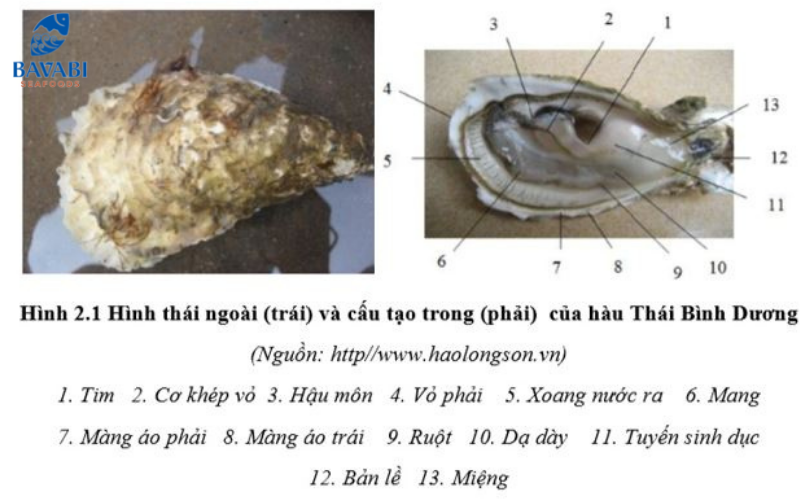
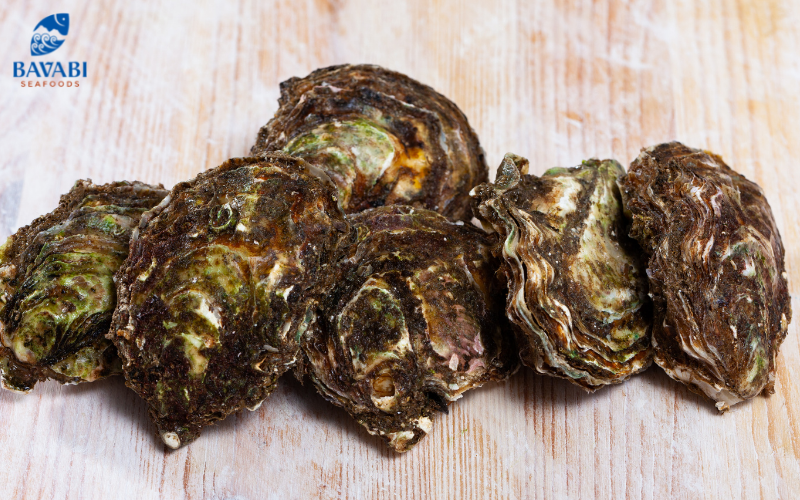
The shape of the shell varies greatly depending on the living environment. If the oyster lives alone on a soft bottom, the shell is smooth and elongated. If distributed on a hard bottom, the shell is tubular, wrinkled, the left shell is rounder and more deeply concave. When the milk oysters are distributed in a concentrated manner, the shell has a distorted shape. Through the shape of the oyster shell, it is possible to determine the characteristics of the substrate at the point where they are distributed. Oysters living in high salinity have harder shells than those living in low salinity areas (FAO, 2003).
Distribution of milk oysters
Pacific milk oysters are naturally distributed in the northern waters of Japan. They have been introduced to many countries around the world and are now commonly found in the waters of France, England, Mexico, China, Brazil, etc. (FAO, 2003), (Grove – Jones, 1986). Since 2003, TBD oysters have been farmed in 64 countries around the world, especially China, Japan, Korea, Taiwan, France, the US, Canada…
The living habits of milk oysters
Adult oysters often live fixedly, clinging to any hard object. Specifically, rocks, oyster shells, dead corals… in the tidal area between high and low tides of about 3m or in the middle of shallow water. They tend to prefer brackish water areas of river mouths or coastal areas near the shore.
The ability of TBD oysters to adapt to environmental fluctuations is very large. Especially the temperature and salinity factors. Oysters are a wide-therm species, they can live at temperatures of 1.8°C – 35°C and are most suitable at 20°C – 28°C (FAO, 2003).
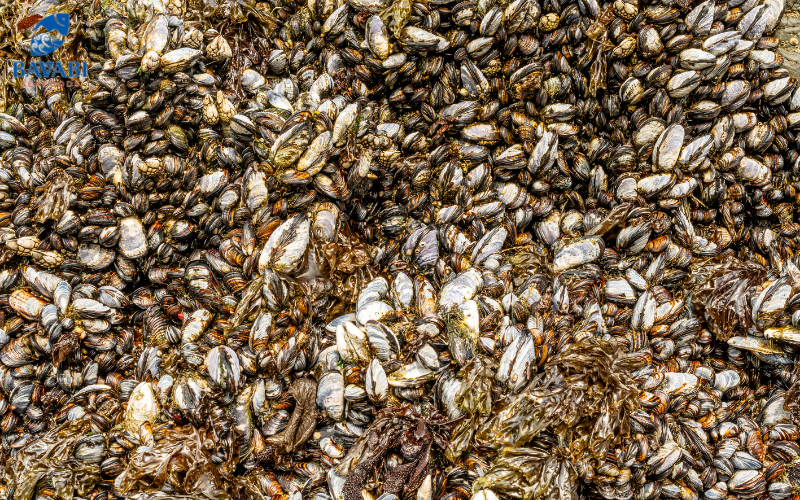
Therefore, milk oysters can be cultured in estuaries with low salinities (FAO, 2003). The method of catching prey of oysters is similar to other bivalves, which is passive filtering.
Food and method of catching prey
Food of milk oysters
The food of Pacific milk oysters is larvae including bacteria, small organisms, organic debris, Sillic algae, and flagellates with a size of less than 10µm. Larvae can use water-soluble substances and organic matter particles.
When they are adults, their food is mainly phytoplankton and organic debris. Common algae species are siliceous algae such as: Melosira, Coscinodiscus, Cyclotella, Skeletonema….
How oysters catch prey
The passive method of catching prey of oysters is by filtering. Oysters catch preyduring respiration thanks to the special structure of the gills. When breathing, water carries food through the gill surface, the food particles will be retained in the gills thanks to the cilia and the mucus secreted from the cilia.
Small food particles will be gradually swept towards the mouth by the mucus of the cilia. Food particles that are too large for the cilia to hold will be swept away from the gill surface by the water current. They will then be gathered at the edge of the mantle and pushed out by the mantle. Although oysters passively catch prey, with this method of catching prey, they can only be selective according to food size. The selection process is performed 4 times according to the above method.
- The first time occurs on the gill surface.
- The second time occurs on the transport route.
- The third time occurs on the palps.
- The fourth time occurs in the digestive cavities.
In the stomach, food is partially digested by enzymes such as: Amylase, Lactase, Glipase, Maltase, Protease. Unsuitable food is pushed out. Factors affecting the oyster’s prey capture are tides, food quantity, environmental factors (temperature, salinity, etc.).
Reproduction of oysters
Sex change of oysters
Like other oysters, oysters change sex throughout their life cycle. Usually, the first spawning is male and then turns into female. Environmental factors, especially food, can affect the sex of oysters.
Under conditions of abundant food, they tend to change sex from male to female and vice versa. Under conditions of limited food or when they gather in populations with too high density, the entire oyster colony is male. A few individuals are hermaphrodites.
During the process of development, there is a change in sex, the ratio of male to female varies by season and by location. In nature, the ratio of female oysters is 40 – 68%. Male oysters account for 21 – 61% (from April to October).

This ratio decreases from 0 – 16% (female oysters) and 38 – 90% (male oysters) from November to April of the following year. Baby oysters can participate for the first time very early. Normally, after 6 – 7 months of age, the size reaches 40 – 50mm. At this time, the oyster is able to participate in reproduction for the first time.
The reproductive process of milk oysters
When parent oysters participate in reproduction, eggs and sperm are released into the water environment. The fertilization and development of larvae take place in water. The reproductive capacity of oysters is very dependent on the size of the individual. The larger the individual, the higher the reproductive capacity.
Temperature also greatly affects the reproductive capacity of oysters. Temperature is an important factor and directly affects reproductive capacity. The suitable temperature for reproduction is usually in the range of 28°C – 30°C. Age does not affect the reproductive capacity of oysters.
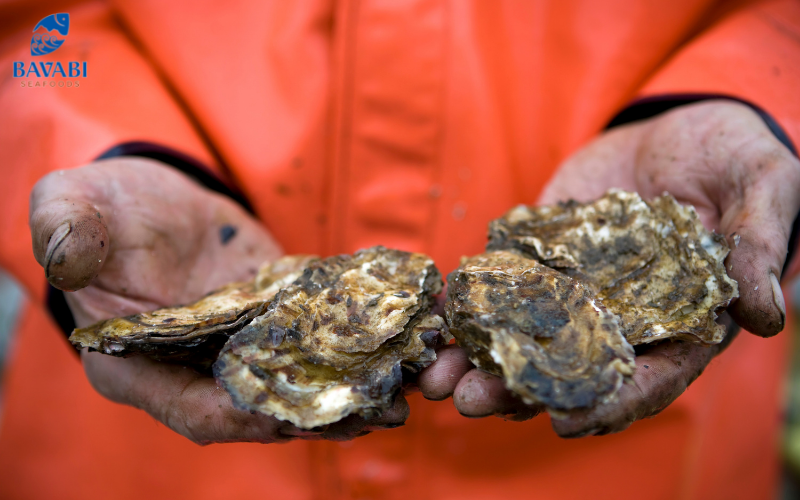
After fertilization, the embryo continues to develop into a larva and when it enters the attachment stage, it is completely unable to swim. Their shape is relatively similar to that of an adult oyster. They are only able to attach once in their lifetime.
The breeding season occurs year-round, but there are two main seasons from April to June and from August to October every year. MSpawning seasons in tropical regions are often less concentrated and longer than in temperate regions (FAO, 2003).
Current status of milk oysters
Currently, oyster farming is developing strongly in many countries. The main source of seeds is artificial reproduction. Oysters are farmed in different forms. For example, rock farming, cage farming, hanging farming with holes and hanging on strings…
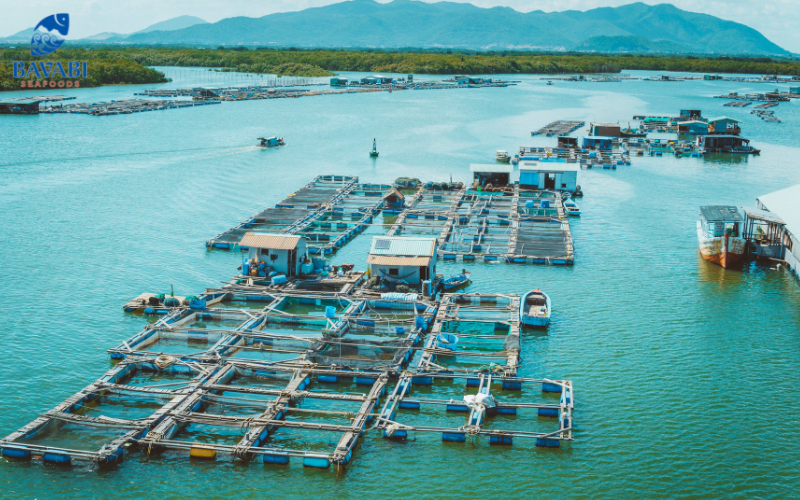
In Vietnam, milk oysters are farmed in Long Son, Can Gio, Vung Tau, Nha Trang, Da Nang. However, the quality of milk oysters is most highly appreciated for Van Don – Quang Ninh milk oysters. Because these are clean sea areas with favorable natural conditions and clean water sources. It is an ideal habitat for oysters.
Bavabi hopes that through this article, you will understand more about the Pacific oyster. If you have any other questions, you can contact Bavabi directly for support and answers.