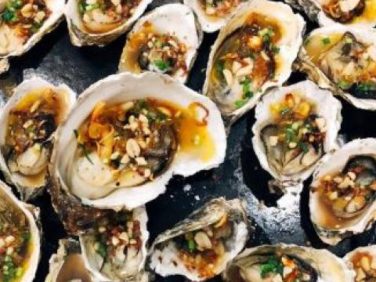
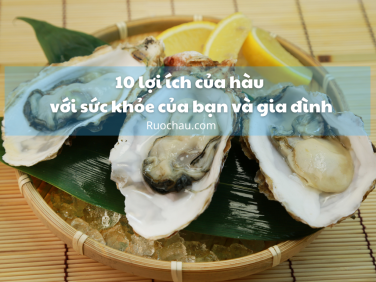
The sea oyster is also known as the Pacific oyster, the English name is Pacific oyster. In the Southern region, the sea oyster is often called Hao. This is a mollusk, belonging to the group of 2-valve mollusks in the family of Clams, Mussels, Snails, Mussels… Because they are related, they have similarities that cause confusion. Many people who do not know about them will call them by the wrong name.
Habitat of sea oysters
Mature sea oysters often live in a fixed place. They can cling to any hard object such as rocks, oyster shells, dead corals… in the tidal area between high and low tides of about 3m or in the middle of shallow water.
The ability to adapt to environmental fluctuations of sea oysters is very large. Especially, the temperature and salinity factors. Sea oysters are a wide-therm species, they can live at temperatures of 1.8oC – 35oC. The most suitable temperature is 20 – 28oC (FAO, 2003).
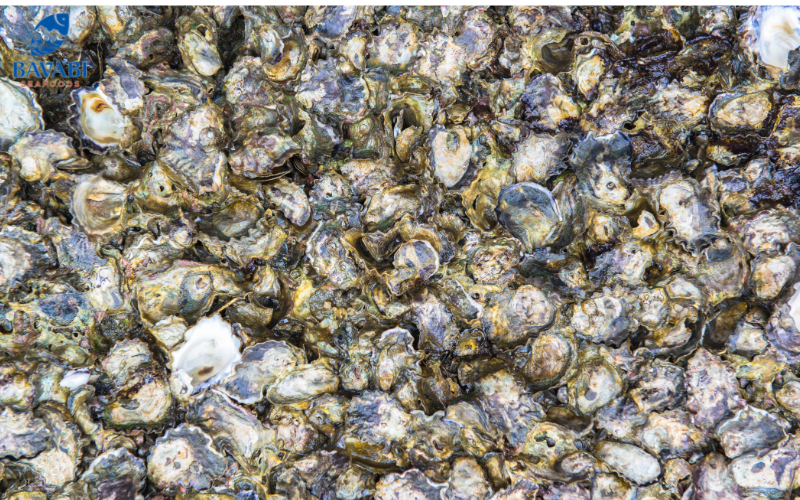
Pacific oysters are also a wide-salinity species. They can live at salinities above 35‰ or below 5‰, at low salinities their growth may be slower. The optimum salinity for the development of adult oysters in seas, bays and lagoons is 16-28‰ (Elizabeth Gosling, 2003), 20-25‰ (FAO, 2003) and 15 – 29‰ for larvae, eggs can develop normally at a salinity of 36‰ (Amemiya, 1928).
Food of Sea Oysters
The food of Sea Oysters is plankton and other organisms in mud, sand, seawater… Larvae include bacteria, small organisms, organic debris, silicic algae, flagellates with a size of less than 10µm.
For larvae, they can use water-soluble substances and organic matter particles. When they are adults, their food is mainly phytoplankton and organic detritus. Common algae species are Silic algae such as: Melosira, Coscinodiscus, Cyclotella, Skeletonema ….
Size of oysters
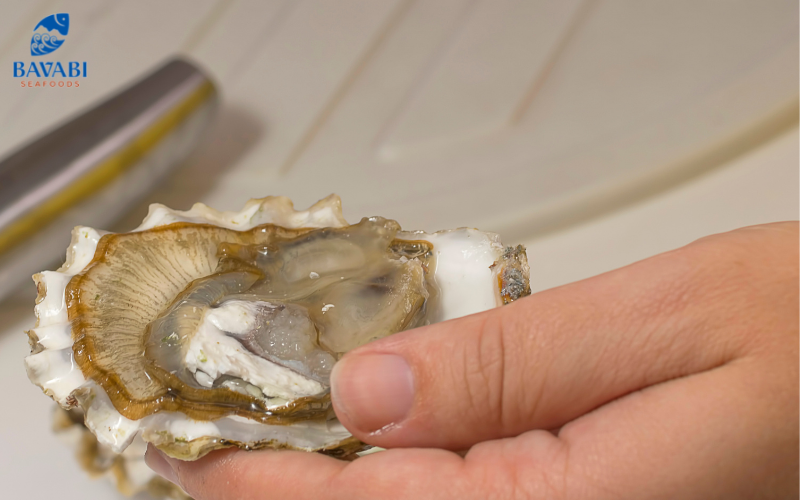
Oysters are much larger than small clams and mussels. The oyster’s body is covered by two hard shells. The left shell is cup-shaped, larger than the right shell and usually clings to the rock substrate. Meanwhile, the right shell is smaller and flatter.
The oyster shell has 3 layers: the outer layer is made of thin horn, easy to peel and is completely made of Protein. The thickest middle layer is limestone with a structure of crystalline Calcium Carbonate firmly attached to the Protein body. The innermost layer is made of thin, shiny, bright and very hard nacre.
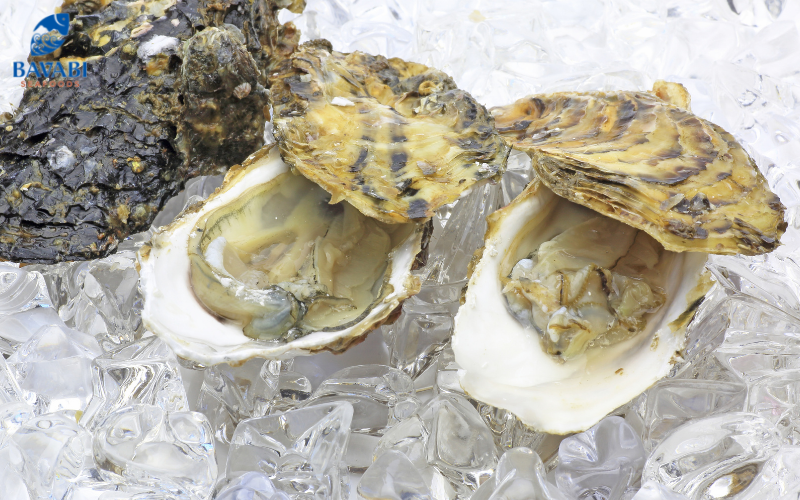
The shape of the shell varies greatly depending on the living environment. If the oyster lives alone on a soft bottom, the shell is smooth and elongated. If distributed on a hard bottom, the shell is tubular, wrinkled, the left shell is rounder and deeply concave.
When oysters are distributed in a concentrated manner, the shell has a distorted shape. Through the shape of the oyster shell, it is possible to determine the characteristics of the substrate at the point of distribution. Oysters living in high salinity have harder shells than those in low salinity areas (FAO, 2003).
Effects of oysters
Oysters are a type of seafood that lives in the sea. They play an extremely important role in the marine ecosystem. Including:
Biological filtration: Oysters filter impurities from seawater extremely well. With a large number growing in nature and widely distributed throughout the seas and oceans, oysters have contributed to cleaning up organic residues. This contributes significantly to cleaning up seawater sources, treating organic residues, and limiting environmental pollution.
Maintaining biodiversity and marine ecosystem chains: Oysters are considered a “producing organism” that provides food for the “consumer chain”, or in other words, “prey” to maintain the balance of some species in nature.
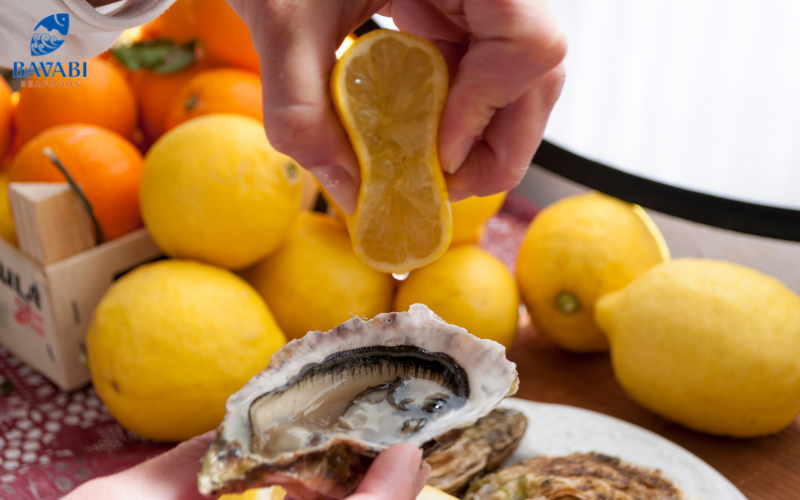
A nutritious seafood dish: Oyster meat is delicious and sweet. Oyster meat is rich in Protein, Zinc, Glucid, fat, Calcium… It is one of the nutritious dishes that is very good for human health.
How much does a kilo of oyster cost?
Currently, oyster prices are divided into many different segments. Depending on the size and quality of the oyster, there are many different prices. At the supermarket system, grade 1 milk oysters, size 10 – 12, cost from 35 – 40k/kg. Grade 2 oysters, size 13 – 18/kg cost 20 – 25k/kg.
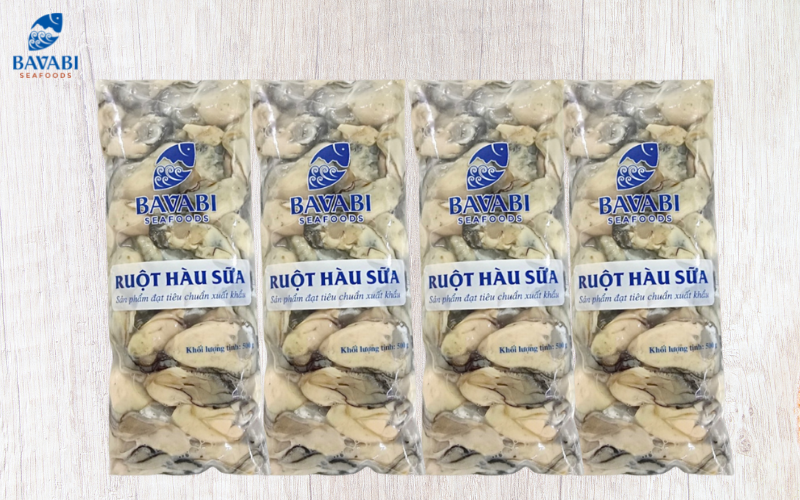
For more convenience, housewives often buy cleaned oyster intestines to save time on processing. One of the brands that provides clean oyster intestines are Bavabi. Grade 1 milk oysters meet export standards, raised in Van Don – Quang Ninh, extremely delicious. You can easily buy milk oyster intestines at the following locations:
- CleverFood clean food store chain
- Dong Que Clean Food Store
- Da Lat Mart Clean Food
- Top Green Clean Food Store Chain
- GNFood Clean Food
- Trau Vang Clean Food.
- Mai’s Clean Food
- Mai Linh Grocery Store
- Or contact Ruoc Hau – Bavabi for direct support.
QUANG NINH AQUACULTURE PRODUCTION AND TRADING COMPANY LIMITED
- Processing factory: Dong Trung – Dong Xa – Van Don – QN
- Hotline: 0203.6293939 – 0971.900.688
- Email: info@bavabioyster.com
- Website: https://www.bavabioyster.com
- Shopee: https://bit.ly/bavabi_shopee
- Lazada: https://bit.ly/bavabi_lazada