2 years ago in Quang Ninh province, most of the facilities and fishermen who raised aquatic products (NTTS) using cages mainly used styrofoam buoys as floating materials. Especially the fishermen who raised Pacific oysters in Van Don – Quang Ninh. Regarding the use of styrofoam buoys by oyster farmers in Quang Ninh, it will greatly affect the problem of waste and the marine environment. Therefore, to quickly resolve this situation, Quang Ninh province has issued its own standards.
Why do people who raise oysters in Quang Ninh use styrofoam buoys?
The use of styrofoam buoys in NTTS by fishermen is because of its low cost and easy to find on the market. People can save initial costs to gain high economic benefits. However, those are just the immediate “perspectives”. In the long run, this will cause many potential risks for farmers and the marine environment.
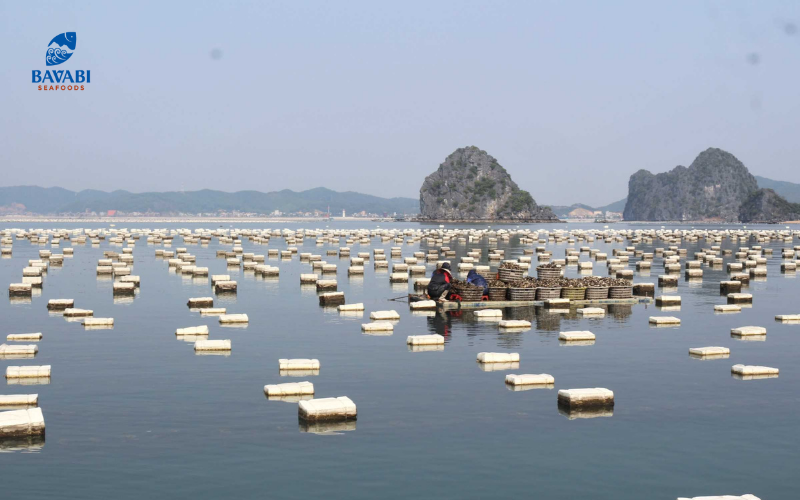
Under the harshness of waves, wind and seawater corrosion, foam buoys clearly reveal their weaknesses. That is, after only about 2 years of use, the connections inside the buoys are broken. The foam inside is lost to the environment, especially after each storm. This creates an increase in marine waste, the risk of environmental pollution of the ecosystem. From there, it affects the living environment of marine creatures.
Technical regulations on aquaculture materials in Quang Ninh
In order to ensure safety for cage and raft farming and protect the coastal environment and landscape, the People’s Committee of Quang Ninh province issued Decision No. 31/2020/QD-UBND promulgating local technical regulations on materials used as buoys in brackish and saltwater aquaculture in Quang Ninh. Subjects of application of the standard include:
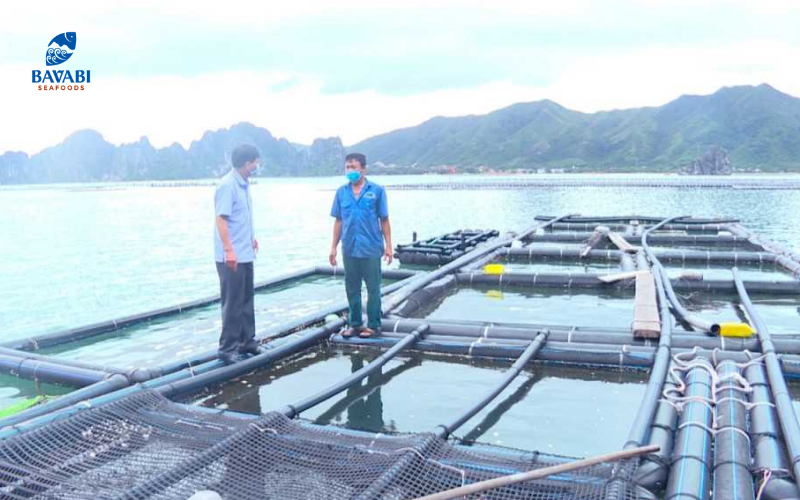
- Aquaculture facilities in brackish and salty water using cages and rafts using floating buoys
- Aquaculture facilities producing and importing floating buoys domestically or imported from abroad to serve aquaculture.
The standard clearly stipulates the management work, responsibilities of organizations and individuals, implementation work, detailed information about floating buoys and floating materials.
At the same time, clearly stipulate the implementation roadmap, brackish and salty aquaculture facilities implement. New investment solutions must comply with the standards. From January 1, 2023, aquaculture facilities using inappropriate buoy materials will have to convert all materials to meet the requirements of the standards.
Applying the aquaculture model using HDPE plastic materials
Advantages of using HDPE plastic materials for aquaculture
After a period of using HDPE plastic materials to replace foam buoys, it has been shown that this material is very durable. The material is highly impact resistant, safe for water sources, and does not corrode or rust. The conversion to aquaculture using HDPE plastic is also more environmentally friendly. It limits the impact on the water environment, and the offspring grow healthily.
Difficulties in implementing the standards
However, during the implementation process, there are still many difficulties. Many fishermen and oyster farmers in Quang Ninh do business spontaneously. Investment capital is fragmented and small. The locality does not have a provincial plan for aquaculture, leading to people illegally occupying the sea surface for aquaculture. This causes difficulties in management.
Many aquaculture households are still hesitant to convert and use suitable buoy materials that meet the requirements of standards. In addition, from 2020 to now, the impact of the Covid-19 epidemic has caused a sharp decrease in the consumption of aquatic products. This has greatly affected the income of aquaculture households, especially oyster farmers in Quang Ninh.
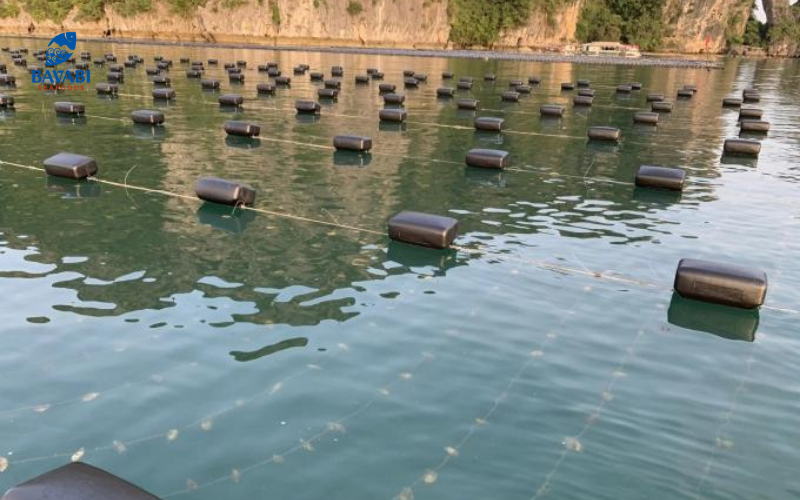
Meanwhile, the cost of installing HDPE plastic material is 1.5 times higher than that of foam buoys. Therefore, many households lack the funds to convert. In order for people to be able to replace foam buoys with this new material, the province needs to have a mechanism to support the conversion because the initial cost is quite large.
Currently, a cage has an area of about 9m2. If using buoys and foam materials, the cost is about 7-8 million VND, but if using HDPE plastic, it is up to 20 million VND. Therefore, to change the habit of using foam buoys to HDPE plastic material, it takes time to convert. In particular, support from provincial and local authorities is needed.
See more: Outstanding advantages when using HDPE plastic buoys for oyster farming