Nowadays, there are many different types of oysters. In Vietnam, estuarine oysters and Pacific oysters are quite popular. If you don’t know how to distinguish them, you can easily mistake them. How to distinguish, details in the article below:
Scientific name of Pacific oyster and estuarine oyster
- Scientific name of Estuarine oyster: Crassostrea rivularis – Gould, 1861, other name in Vietnam: Estuarine oyster
- Scientific name of Pacific oyster: Crassostrea gigas (Pacific oyster) – Thunberg, 1793. Other names in Vietnam: Milk oyster, Pacific oyster, Pacific milk oyster
Characteristics of estuarine oyster and Pacific milk oyster
Estuary oyster
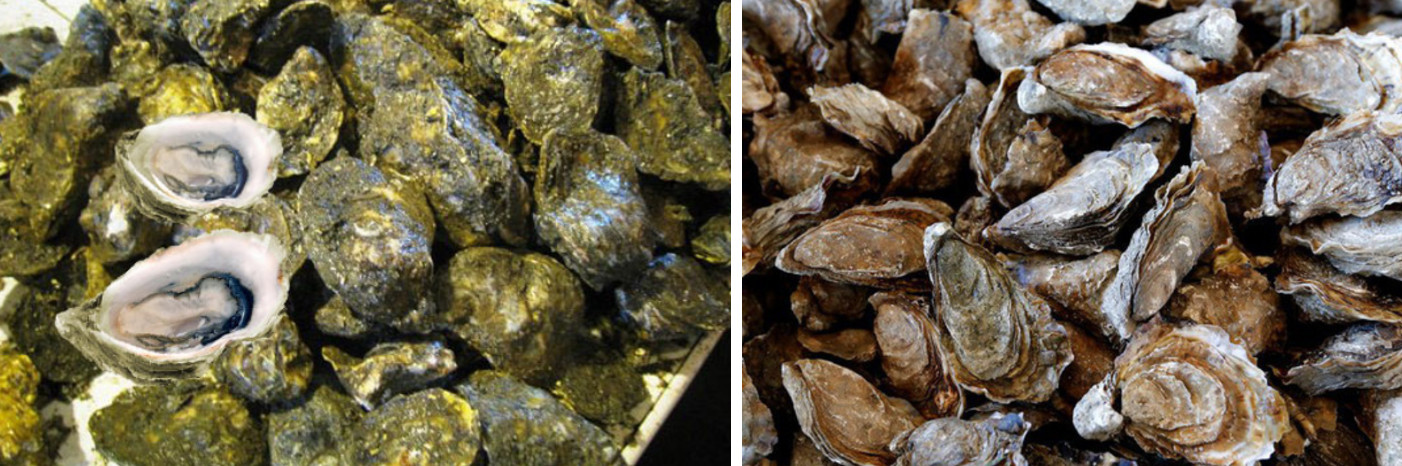
Estuary oysters mostly have white or slightly red meat. The black outer rim is larger than milk oysters. The meat recovery rate of estuarine oysters is lower than that of milk oysters due to the thicker and larger shells of milk oysters.
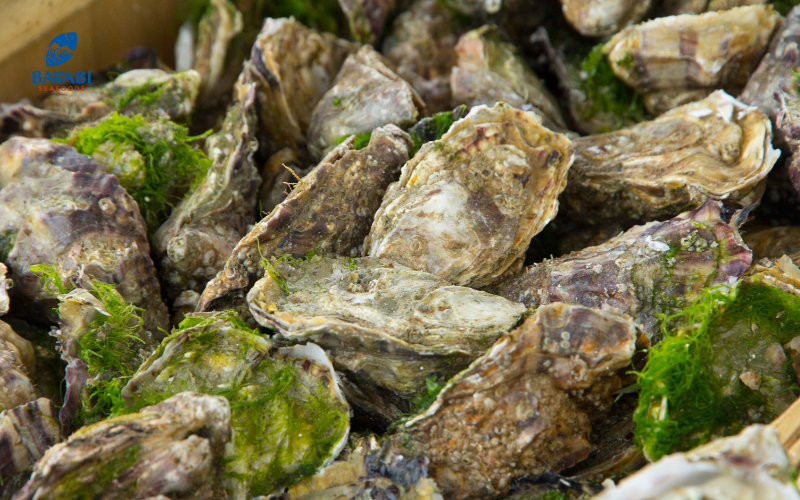
The shell of estuarine oysters is elongated. The left shell (upper shell) is deep cup-shaped and the right shell is slightly convex. The left shell is larger and thicker than the right shell. The right shell (lower shell) is relatively smooth with complex layers consisting of overlapping, fragile, and concentric thin layers. There are no protruding radiation veins from the surface of each shell fragment.
The color of estuarine oyster shells varies from white, light gray, gray, yellow, or pale yellow to purple. The thin layers near the edge are usually darker, and the thin layers near the protrusion are eroded and white. The protrusion and ligament are clearly visible, and are yellow-brown in color. The inner surface of the shell is white and bright with a D-shaped or kidney-shaped adductor muscle scar located near the center, which also varies in color from light yellow, brown to black.
Pacific Oysters
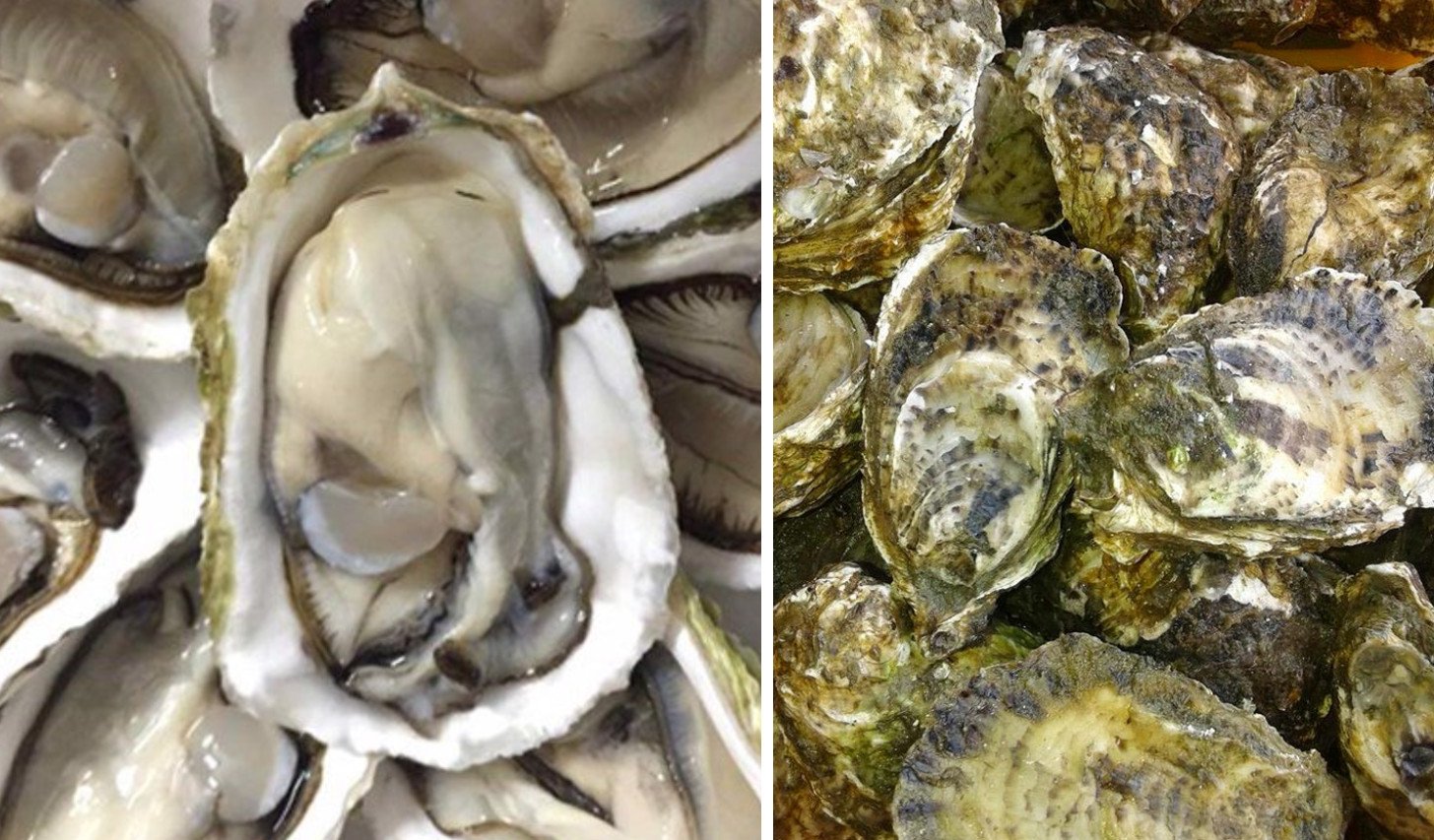
The oyster’s body is covered by two hard shells. The left shell is cup-shaped, larger than the right shell and often clings to the rock base. Meanwhile, the right shell is smaller and flatter. The meat of the milk oyster is opaque white, when harvested, the meat is full to the edge of the shell. The meat ratio of milk oysters is larger than that of estuary oysters.
The oyster shell has 3 layers: the outer layer is made of thin horn, easy to peel and has a structure entirely made of Protein. The thickest middle layer is a limestone layer with a structure consisting of crystalline Calcium Carbonate firmly attached to the Protein body and the innermost layer is made of thin, shiny, bright and very hard nacre.
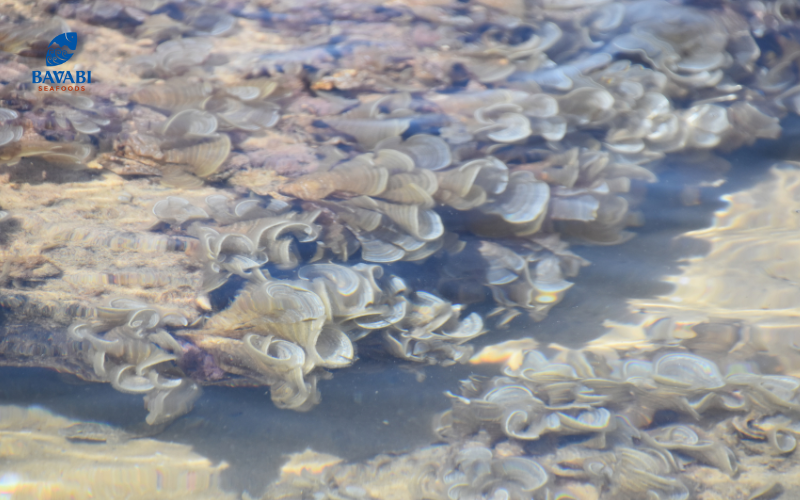
The shape of the shell varies greatly depending on the habitat. If oysters live alone on soft substrates, the shells are smooth and elongated. If they are distributed on hard substrates, the shells are tubular, wrinkled, and the left shell is rounder and deeply concave.
When oysters are distributed in concentrated areas, the shells have a distorted shape. Through the shape of the oyster shells, it is possible to determine the characteristics of the substrate at the point of their distribution. Oysters living in high salinity have harder shells than those in low salinity areas (FAO, 2003).
 Distribution of estuarine oysters and Pacific oysters
 Distribution of estuarine oysters and Pacific oysters
Estuary oysters
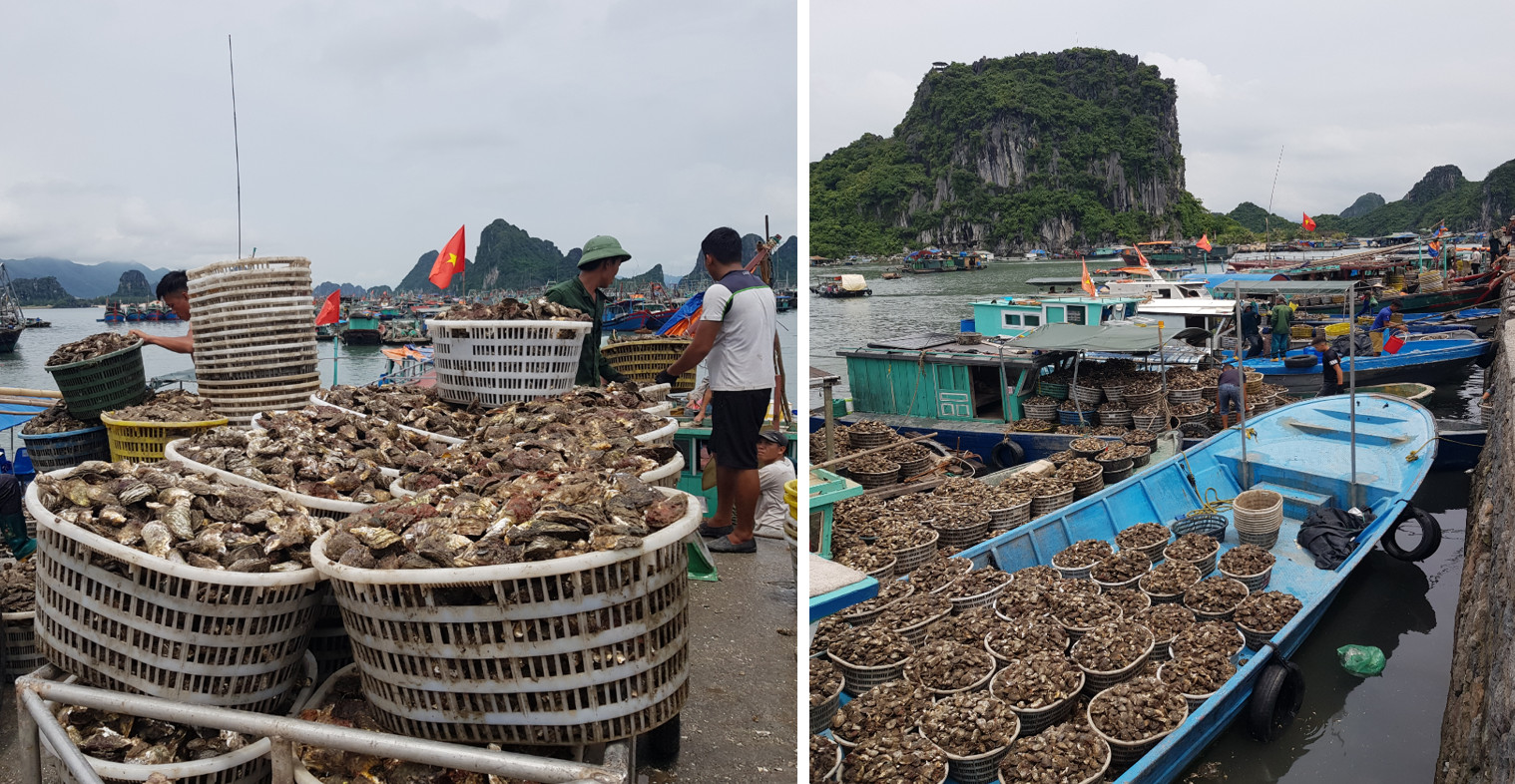
Estuary oysters were first discovered by Gould (1861) based on a specimen collected from an estuary in southern China. It was later developed in Japan and China. In Vietnam, estuarine oysters are distributed in most coastal provinces with estuaries. For example, Quang Ninh, Quang Binh, Quang Tri, Thua Thien Hue, Da Nang, Quang Nam, Can Gio, Vung Tau…
Pacific oysters
Pacific oysters are naturally distributed in the northern waters of Japan. They have been introduced to many countries in the world and are now commonly found in the waters of France, England, Mexico, China, Brazil, etc. (FAO, 2003), (Grove – Jones, 1986).
Since 2003, Pacific oysters have been farmed in 64 countries around the world. Especially in China, Japan, Korea, Taiwan, France, the US, Canada, etc. Milk oysters have been farmed on a pilot basis in Vietnam since 2006 in Van Don, Quang Ninh. Up to now, Van Don has become the largest center for farming Pacific milk oysters in the country with an area of thousands of hectares of sea surface.
Habits of estuary oysters and Pacific oysters
Estuary oysters
Distributed very widely in our country. Most estuaries with attachments have estuary oysters. They often form very large oyster beds, sometimes tens of kilometers long, such as in Bach Dang River, Chanh River and neighboring rivers. Therefore, estuary oysters are the type of oyster that accounts for the main natural output in our country.
The annual output can reach hundreds of tons including shells. Estuary oysters live in brackish water, adapt to a wide range of salinities, sometimes living in water with salinities from 1 – 30‰ but the most suitable is 10 – 23‰. They can be distributed from the high tide line to a depth of 10m. However, the most and often the largest range is 5 – 7m.
Pacific Oysters
The ability to adapt to environmental fluctuations of Pacific oysters is very large. Especially the temperature and salinity factors. Pacific oysters are a speciesThey are also diazotrophic, they can live at temperatures of 1.8°C – 35°C and are most suitable at 20 – 28°C (FAO, 2003). Pacific oysters are also diazotrophic, they can live at salinities above 35‰ or below 5‰.
At low salinities, growth may be slower. The optimum salinity for the development of adult oysters in seas, bays and lagoons is 16-28‰ (Elizabeth Gosling, 2003), 20-25‰ (FAO, 2003) and 15-29‰ for larvae, although eggs can develop normally at a salinity of 36‰ (Amemiya, 1928).
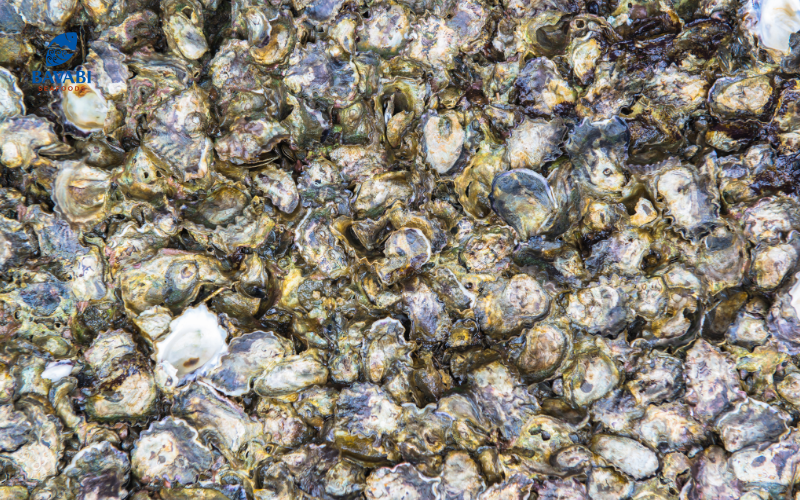
Adult oysters usually live fixed, attached to any hard object such as rocks, oyster shells, dead corals… in the tidal area between high and low tides of about 3m or in the middle of shallow water.
Food and prey capture method
Food of oysters
Food of estuarine oysters and Pacific oysters is larvae including bacteria, small organisms, organic debris, siliceous algae, flagellates with a size of less than 10µm.
Larvae can use water-soluble substances and organic matter particles. When they are adults, their food is mainly phytoplankton and organic debris. Common algae species are Silic algae such as: Melosira, Coscinodiscus, Cyclotella, Skeletonema….
How oysters catch prey
The passive method of catching prey of oysters is by filtering. Oysters catch prey during the respiratory process thanks to the special structure of the gills. When breathing, water carries food through the gill surface. Food particles will be retained in the gills thanks to the cilia and mucus secreted from the cilia.
Small food particles will be gradually swept towards the mouth by the mucus of the cilia, while food particles that are too large for the cilia to hold will be swept away by the water flow from the gill surface. Then they will be gathered at the edge of the mantle and pushed out by the mantle.
Although oysters catch prey passively, with this method of catching prey, they can only select according to food size. The selection process is carried out 4 times according to the above method.
The first time occurs on the gill surface, the second time occurs on the transport route, the third time occurs on the palp, the fourth time occurs at the digestive sac. In the stomach, food is partially digested by enzymes such as: Amylase, Lactase, Glipase, Maltase, Protease. Unsuitable food is pushed out. Factors affecting the oyster’s prey-catching activities are tides, food quantity, environmental factors (temperature, salinity, etc.).
Reproduction process of oysters
Oysters are animals that have clearly differentiated males and females. There are no cases where eggs and sperm are formed in the same individual. However, during the development process, there is a change in the ratio of males and females, which varies according to the season and location.
In nature, the ratio of female oysters is 40 – 68%, male oysters account for 21 – 61% (from April to October). This rate decreases from 0 – 16% (female oysters) and 38 – 90% (male oysters) in the months from November to April of the following year. Baby oysters can participate for the first time very early after 6 – 7 months of age. With a size of 40 – 50mm, they are capable of participating in reproduction for the first time.
When parent oysters participate in reproduction, eggs and sperm are released into the water environment. The fertilization and development of larvae take place in water. The reproductive capacity of oysters is very large and depends a lot on the size of the individual. The larger the individual, the higher the reproductive capacity.
Temperature is an important factor and directly affects the reproductive capacity. The suitable temperature for reproduction is usually in the range of 28 – 30°C. Age does not affect the reproductive capacity of oysters.
The reproductive season occurs all year round. However, there are two main seasons from April to June and from August to October every year. The reproductive season in tropical regions is often less concentrated. And it lasts longer than in temperate regions (FAO, 2003).
After fertilization, the embryo continues to develop into larvae and when they move to the attachment stage, they are completely unable to swim, their shape is relatively similar to that of adult oysters, they are only able to attach once in their life.